
Casarte中央空调24小时人工服务(卡萨帝空调用英语怎么读How to say air conditioning i
In this article, we will explore the different ways to say "air conditioning" in English. We will discuss the origins of the term, explore various synonyms, cover regional variations, and delve into the technical terminology. By the end, you will have a comprehensive understanding of the different ways to express this concept in the English language.

The term "air conditioning" originated from the combination of two separate words: "air" and "conditioning." The concept dates back to ancient times when people used various methods to modify the air quality around them. However, the modern usage of the term can be credited to Stuart Cramer, an engineer, who first used it in 1906 to describe a system that controlled air quality, temperature, and humidity.
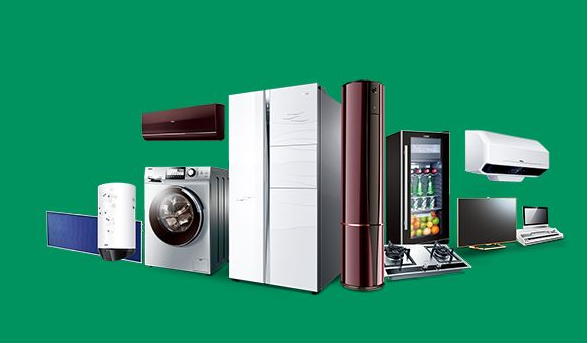
Since then, "air conditioning" has become the widely accepted term to describe systems that regulate indoor temperature and humidity levels. It has become increasingly essential in modern life, providing comfort and enabling productivity in various settings, such as homes, offices, and commercial spaces.

While "air conditioning" is the most commonly used term, there are several synonymous expressions that can be used to refer to the same concept. Some popular alternatives include "climate control," "cooling," and "AC" (an abbreviation for "air conditioning").
"Climate control" is a broader term that encompasses not only cooling but also heating and ventilation. It refers to systems that maintain a comfortable and consistent indoor environment regardless of external weather conditions. "Cooling" is a more general term and can be used to describe any method or system that lowers temperatures, including fans or evaporative cooling methods.

The abbreviation "AC" is often used in informal settings or in written communication. It is commonly understood to refer to air conditioning and is frequently used in advertisements, product descriptions, and everyday conversations.
English is spoken in many different countries with distinct regional variations in vocabulary. The term "air conditioning" is widely understood across these regions, but there are also variations in terminology that reflect local preferences.
In British English, the term "air conditioning" is commonly used, but "air con" is a more informal and abbreviated version. Similarly, Australians often use "air con" or the abbreviation "AC" in casual conversations. In North America, the term "AC" is frequently used, both in informal and formal contexts, as a shorthand for "air conditioning."
It is important to note these regional variations when communicating about air conditioning, especially in international settings, to ensure clear understanding between different English speakers.
Air conditioning systems come in various types, each with its technical name that describes the specific method used for cooling. Some common technical terms include "central air conditioning," "window unit," "split system," "ductless mini-split," and "evaporative cooler."
"Central air conditioning" refers to a system that cools an entire building or a large area through a network of air ducts and vents. The term "window unit" is used to describe a self-contained air conditioning system mounted within a window or a hole in an exterior wall.
A "split system" consists of two separate units: an outdoor compressor and an indoor unit. It is a commonly used system in both residential and commercial settings. "Ductless mini-split" systems are similar to split systems but do not require ductwork, making them easier to install in older buildings or where space is limited.

An "evaporative cooler," also known as a "swamp cooler," operates by evaporating water to cool the air. This type of system is more common in arid regions where humidity levels are low.
In conclusion, "air conditioning" is the widely accepted term to describe systems that regulate indoor temperature and humidity levels. However, alternatives such as "climate control," "cooling," and "AC" are also commonly used. Regional variations exist, with "air con" and "AC" being preferred in certain English-speaking countries. Technical terminology encompasses different types of systems like central air conditioning, window units, split systems, ductless mini-splits, and evaporative coolers. Understanding these variations and technical terms will help facilitate effective communication about air conditioning in English.
- 维修知识
- 安装知识
- 清洗保养
- 行业新闻
- 常见问题
- 中赤锅炉售后电话24小时人工电话02-28
- 广州AEG空气能维修电话是多少02-28
- 威瓦锅炉售后服务电话02-28
- Bosch锅炉售后服务热线02-28
- 康顿KND燃气灶维修电话02-28
- 净水器怎么样02-28
- Balod锅炉400客服电话02-28
- 中赤地暖售后24小时人工客服02-28
- ARREX冰箱维修电话02-28
- NUOWEISI风幕柜售后服务号码02-28
- 广州麦克威尔空气能售后电话是多少02-28
- XSAN燃气灶售后电话02-28
- MINIJ冰箱售后服务号码02-28
- 佛山阿塔斯雪茄柜售后服务号码是多少02-28
- ILIDA锅炉售后服务电话24小时02-28
- 基诺德锅炉全国统一服务热线02-28
- Fondital空气源热泵售后维修02-28
- Mibesion冰箱售后电话02-28
- 尤勒恺夫冰箱售后服务号码02-28
- Brotje锅炉售后服务电话24小时02-28
- 国扬锅炉售后服务电话号码是多少02-28
- LAIMD冰箱售后24小时人工客服02-28
- 佛山Rheem空气能售后维修是多少02-28
- 德国UKS燃气灶售后维修02-28
- GMY地暖售后服务号码02-28
- SHENZHOU锅炉总部400售后维修02-28
- 德地氏地暖售后24小时人工客服02-28
- Rinnai燃气灶维修电话02-28
- 廣意集成灶售后服务号码02-28
- 佛山Baixue制冰机售后维修是多少02-28
- 库博士油烟机维修电话02-28
- Panasonic烘干机维修电话02-28
- 佛山DINCEI冰箱售后维修是多少02-28
- 佛山SUB-ZERO冰箱售后维修是多少02-28
- ARISTON锅炉售后服务号码02-28
- 德国宝热水器售后电话02-28
- 凯特欧酒柜售后24小时人工客服02-28
- 广州西膳冰箱售后电话是多少02-28
- TAADA热水器售后24小时人工客服02-28